Natural Remedies for Dogs — What Actually Works
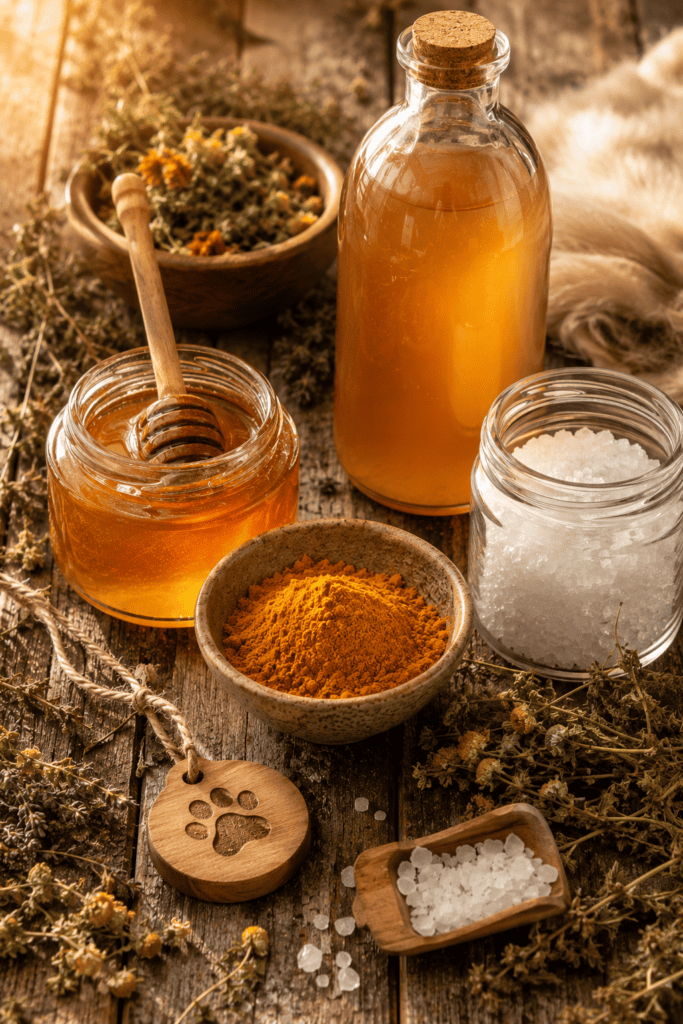
My dogs eat better than most people I know.
Not because I’m excessive about it — because I’ve learned over years of living with animals that what goes into their bodies every single day matters enormously. The difference between a dog on a thoughtful natural wellness routine and one who isn’t is visible. The coat, the energy, the skin, the digestion — all of it shows.
Here’s what I actually do. Not what I read about doing. What I do every single day.
Milk Kefir — The Daily Gut Builder
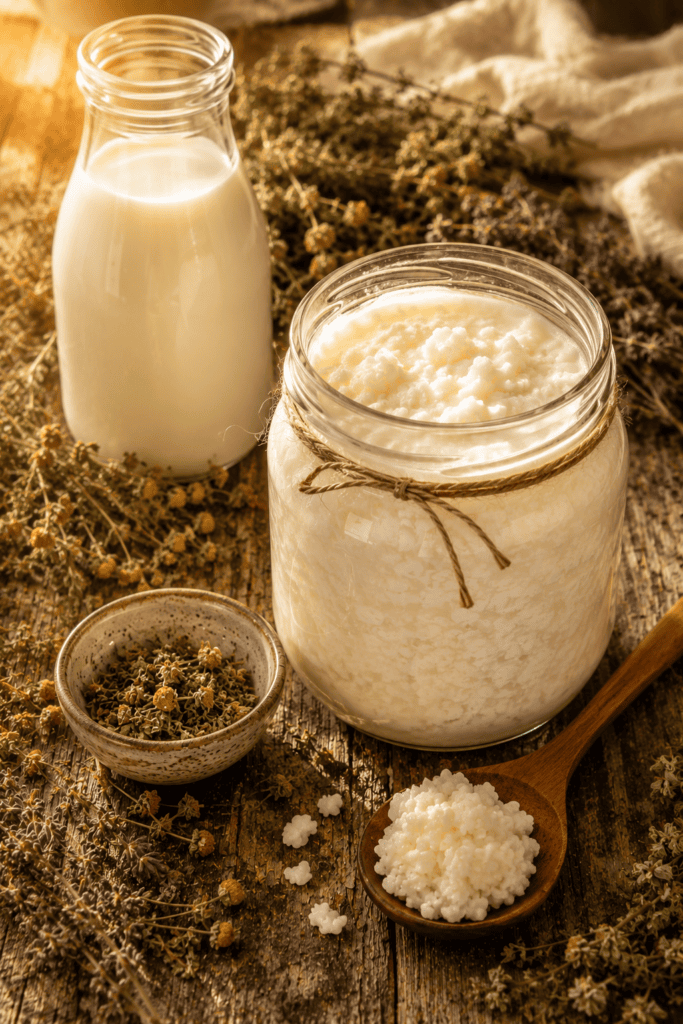
Every single day my dogs get milk kefir made from real milk and live kefir grains.
Kefir is a fermented milk drink packed with billions of live beneficial bacteria — far more than any commercial probiotic supplement. The fermentation process breaks down the lactose so even dogs who are sensitive to dairy can usually tolerate it well.
What it does: builds and maintains a healthy gut microbiome, supports immune function, improves digestion, reduces inflammation. A healthy gut affects everything — skin, coat, mood, energy, susceptibility to illness. It’s the foundation I build everything else on.
I make it myself from raw milk and kefir grains which is significantly more potent than store-bought. If you can’t make your own, look for plain whole milk kefir with live active cultures — not the flavored sweetened versions.
How much: A few tablespoons daily for smaller dogs, up to a quarter cup for larger breeds. Start small and increase gradually to give their system time to adjust.
Apple Cider Vinegar — Inside and Out
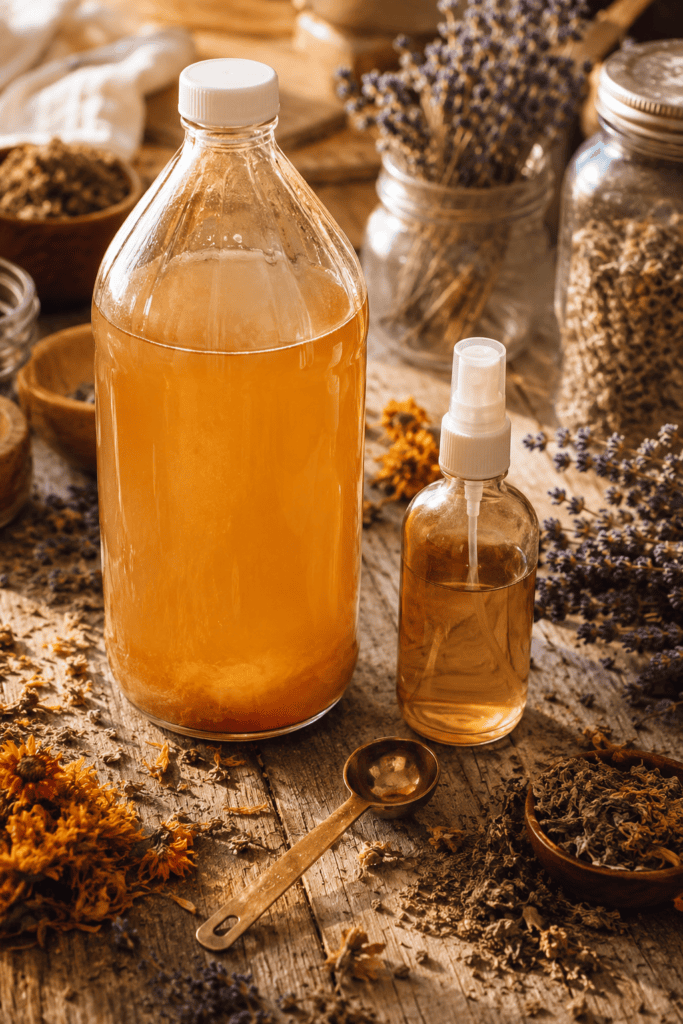
Raw unfiltered apple cider vinegar with the mother is one of the most versatile things in my dog care cabinet. I use it two ways.
Internally: A small amount added to their food or water daily supports gut health, improves stamina, aids whelping, prevents muscle fatigue after exercise, increases resistance to disease, protects against food poisoning, helps maintain healthy pH balance, and supports digestion. 1/2 to 1 tsp per 15 pounds day for dogs and cats.
On their coat: I spray a 50/50 mixture of raw apple cider vinegar and water directly onto their coats after baths or whenever their skin seems irritated or itchy. It’s antifungal, antibacterial, and mildly acidic — which helps maintain the skin’s natural pH and discourages yeast and bacteria that cause itching, odor, and skin problems.
My dogs have beautiful, itch-free skin and coats year round. I credit the ACV spray as a significant part of that.
One caution: never apply near the eyes or on broken skin — the acidity will sting.
Nutritional Yeast — Natural Flea Repellant
This one surprises people every time I mention it.
Nutritional yeast fed daily creates a byproduct in your dog’s skin and coat that fleas find unappealing. It’s not a perfect standalone solution for heavy flea populations but as part of a daily wellness routine it makes a real difference — especially combined with the ACV coat spray which fleas also dislike.
Beyond the flea-repellant effect, nutritional yeast is genuinely nutritious — rich in B vitamins, protein, and minerals. It tastes slightly cheesy which most dogs love, making it one of the easiest supplements to get them to eat.
The dose is approximately 1 tsp per 15 pounds daily. Sprinkle it on their food. It’s inexpensive, easy, and does double duty.
Bone Broth — Daily Nourishment
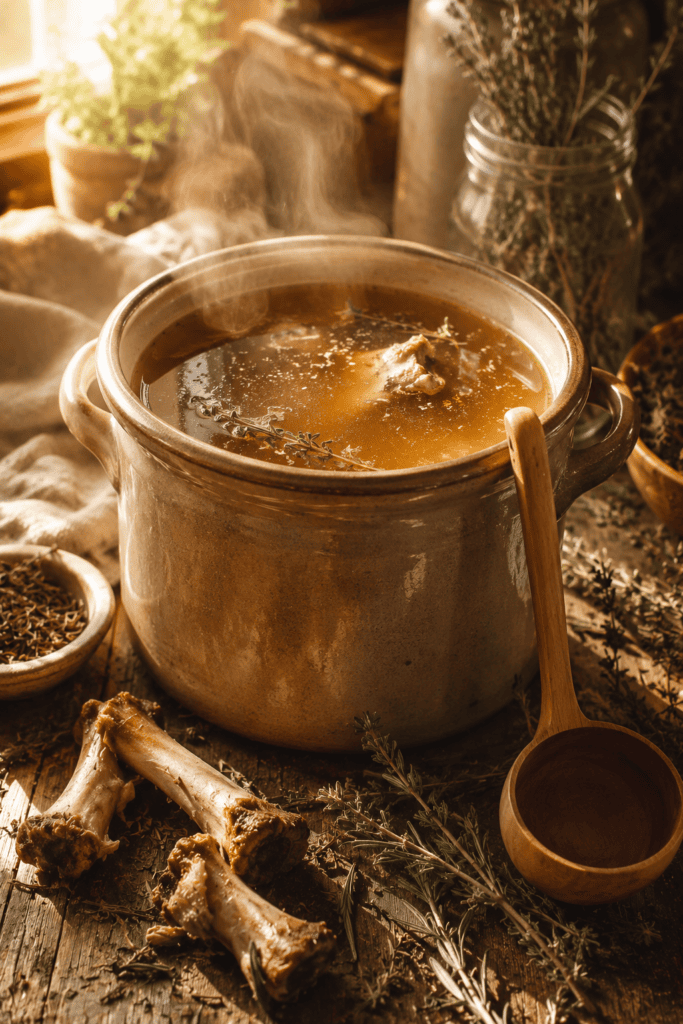
Every single day my dogs get bone broth.
Real bone broth — made from bones simmered for 12-24 hours — is rich in collagen, gelatin, glucosamine, and minerals that support joint health, gut lining integrity, coat quality, and overall vitality. It’s especially valuable for older dogs or any dog with joint issues.
Pour it over their food, freeze it in ice cube trays for summer treats, or offer it warm in winter. Dogs who are picky eaters or recovering from illness will often eat enthusiastically when their food is moistened with bone broth.
Make sure any broth you use is unseasoned — no onion, garlic, or salt which can be harmful to dogs. Make your own or look for plain unseasoned versions.
Raw Honey — For Everything That Needs Healing
I wrote extensively about raw honey in my natural remedies article and everything I said there applies to dogs too.
Wound healing, immune support, soothing irritated throats — raw honey works on dogs with the same effectiveness as it does on people. It’s safe for dogs over one year old in small amounts.
For wounds I apply it directly and leave it — it creates a healing environment that I’ve watched close serious injuries faster than anything else I’ve tried. For general wellness a small amount mixed into food provides antioxidants and immune support.
Always raw and unprocessed — commercial honey is often heated in ways that destroy the beneficial compounds that make it effective.
Turmeric — For Inflammation
Any dog dealing with joint pain, arthritis, or chronic inflammation benefits from turmeric supplementation. The active compound curcumin is one of the most studied natural anti-inflammatory substances available.
The trick with turmeric is bioavailability — on its own the body doesn’t absorb it well. Combining it with black pepper dramatically increases absorption, as does fat. I mix turmeric with a little coconut oil and a pinch of black pepper — sometimes called golden paste — and add a small amount to their food daily.
For dogs already on anti-inflammatory medications check with your vet before adding turmeric as it can interact.
MSM — For Joints, Skin, and Recovery
Methylsulfonylmethane — MSM — is an organic sulfur compound that supports joint health, reduces inflammation, and is essential for healthy skin, coat, and connective tissue.
I give it to my dogs daily and have seen real differences in joint mobility in older dogs and coat quality across the board. It’s particularly valuable after any kind of physical stress or injury — it was part of the protocol I used for my puppy who was attacked by a wild boar and is now running again despite a torn CCL.
MSM is generally very well tolerated. Start with a low dose and increase gradually. The powder form is easiest to mix into food.
Olive Leaf Extract — Natural Antibiotic
When infection is a concern — wounds, illness, anything where I’d normally worry about bacteria — olive leaf extract is my first line of defense.
It has genuine antimicrobial properties and has been used for centuries as a natural antibiotic alternative. I give it morning and night when there’s an active concern and as occasional maintenance support during cold and flu season or after exposure to illness.
It was a key part of the protocol for my boar attack puppy — given twice daily throughout his recovery to guard against infection in wounds that couldn’t be fully sutured.
A Note on Dosing and Vet Relationships
Everything I share here is what I personally do with my own dogs based on years of experience and research. It is not veterinary advice and I’m not a vet.
I’m also not anti-vet — I have a good relationship with my vet and there are absolutely situations that require professional care. What I’ve built is a daily wellness foundation that keeps my dogs healthy and resilient, and a cabinet of natural tools for situations where I can effectively support healing at home.
Build your own knowledge base. Know your dogs. And always err on the side of professional care when something feels serious.
Want to learn how to make your own herbal extracts for your whole family including your pets? The No-Guesswork Tincture Guide covers everything you need to get started with confidence.