How to Use Vintage Doors as Garden Privacy Screens — and So Much More
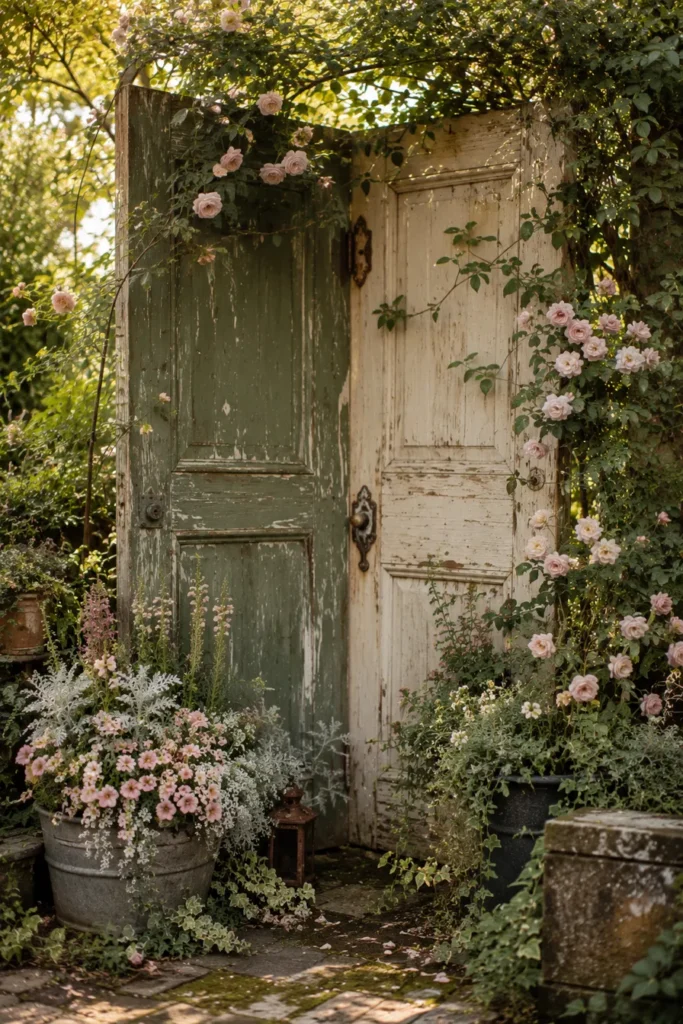
Nobody expects a door in the middle of a garden.
That’s exactly why it works.
A weathered antique door — or two hinged together — standing alone in a garden or on a porch creates something that stops people mid-stride. It’s unexpected, completely personal, and impossible to replicate exactly. No two vintage doors are alike, which means no two privacy screens will ever look the same.
I’ve been making these for years. Here’s how to do it well.
Finding the Right Doors
The best doors for this project are the ones that look like they’ve already lived a full life. Old farmhouse doors, salvage yard finds, architectural pieces pulled from demolished buildings — the more character they have, the better.
Look for:
- Solid wood construction — hollow core doors won’t hold up outdoors
- Interesting details — panel molding, original hardware, glass panes, interesting shapes
- Signs of age — peeling paint, worn edges, patina. This is a feature not a flaw
- Similar heights — if you’re hinging two together they don’t have to match perfectly but similar heights look more intentional
Where to find them: Architectural salvage yards are the best source — they specialize in exactly this kind of material. Habitat for Humanity ReStore locations often have old doors at very low prices. Estate sales, barn sales, and Facebook Marketplace are also excellent sources. Antique stores occasionally have them but usually at higher prices.
Choosing Your Paint Color
This is where the project becomes entirely yours.
Painting a salvaged door transforms it from an old architectural piece into a deliberate design statement. The color you choose sets the entire mood of your garden corner.
Some combinations that work beautifully:
A deep sage green door with climbing roses and white flowers at the base — romantic and timeless, like something from a French countryside garden.
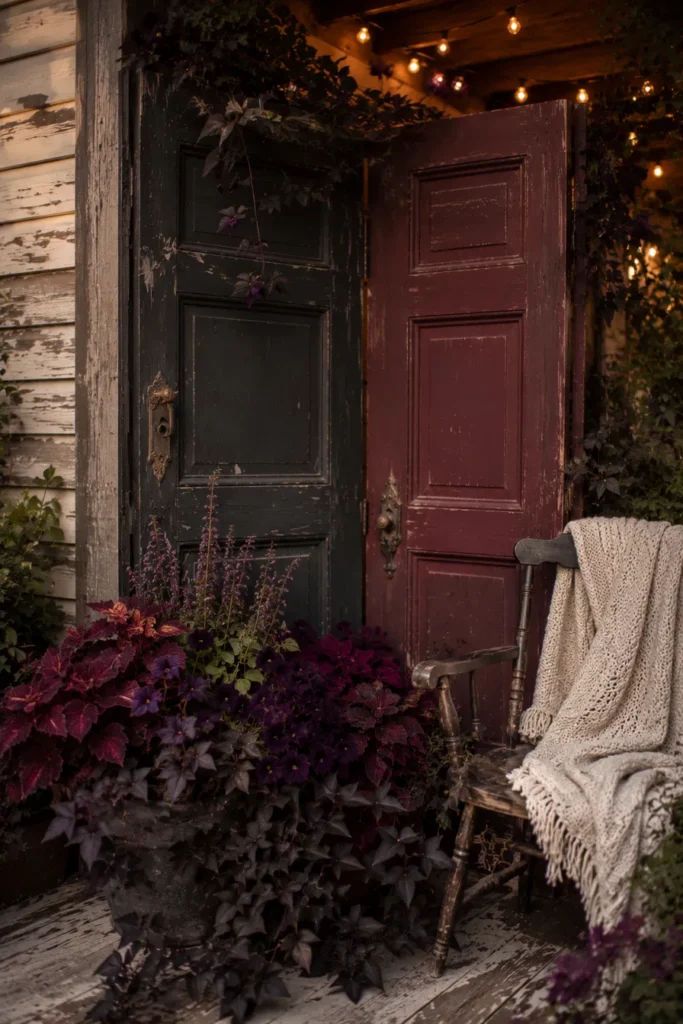
Charcoal almost-black paired with burgundy and deep purple plantings — dramatic and sophisticated, the kind of garden corner that makes people catch their breath.
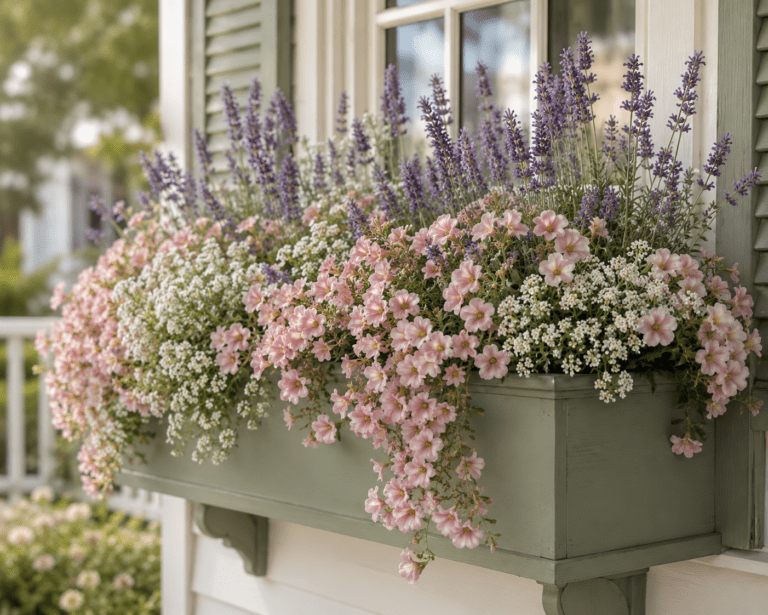
Antique cream or whitewash — soft and ethereal, works beautifully with lavender, white cosmos, and silvery foliage.
Warm terracotta or rust — earthy and Mediterranean, stunning with orange marigolds and bronze fennel.
Painting tips: Use an exterior paint designed for wood — it needs to handle weather and moisture. A chalk finish or matte exterior paint gives you that soft, aged look that suits vintage doors perfectly. Apply two coats and let it cure fully before moving the door outdoors. Deliberately leaving some of the original surface showing through — especially around edges and hardware — adds authenticity.
Hinging Two Doors Together
Two doors hinged together create a freestanding screen that can angle into a V shape — incredibly stable and visually more interesting than a single door.
What you need:
- Two doors of similar height
- Heavy duty exterior hinges — at least three, positioned evenly down the connecting edge
- A drill and appropriate screws for the door thickness
- A helper for the actual hinging (doors are heavier than they look)
The process: Stand both doors upright side by side with the edges you want to join touching. Mark your hinge positions evenly — top, middle, and bottom at minimum. Pre-drill your holes to prevent the wood from splitting. Attach hinges to one door first, then carefully attach the second door.
The angle between the two doors determines stability — a wider V shape is more stable outdoors where wind can be a factor. For porch use you can hinge them at a narrower angle for a more dramatic look.
Stabilizing Your Screen
A freestanding door screen needs to be anchored — especially outdoors where wind can become a problem.
Options for stabilization:
Large container planters at the base — heavy planters filled with soil and plants at the base of each door anchor it beautifully and add to the garden aesthetic. This is my favorite approach because the planters become part of the design.
Decorative stakes or rebar — driven into the ground and attached discreetly to the back of the door. Invisible from the front, effective at preventing movement.
A simple wooden base frame — built from cedar or treated lumber that the doors attach to. More work but very stable for permanent installations.
Against an existing structure — positioning one door against a fence, wall, or post and extending the second door out at an angle. The structure does the stabilizing work.
Letting the Garden Claim It
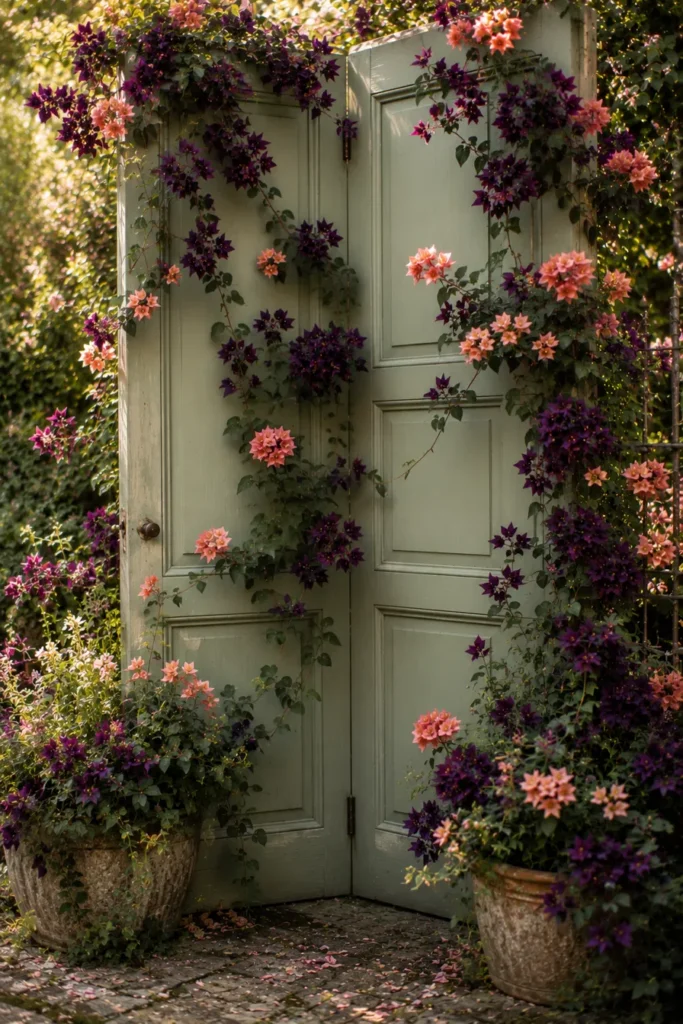
The most beautiful vintage door screens are the ones that look like the garden has been growing around them for years — even if you installed them last weekend.
How to achieve that lived-in look quickly:
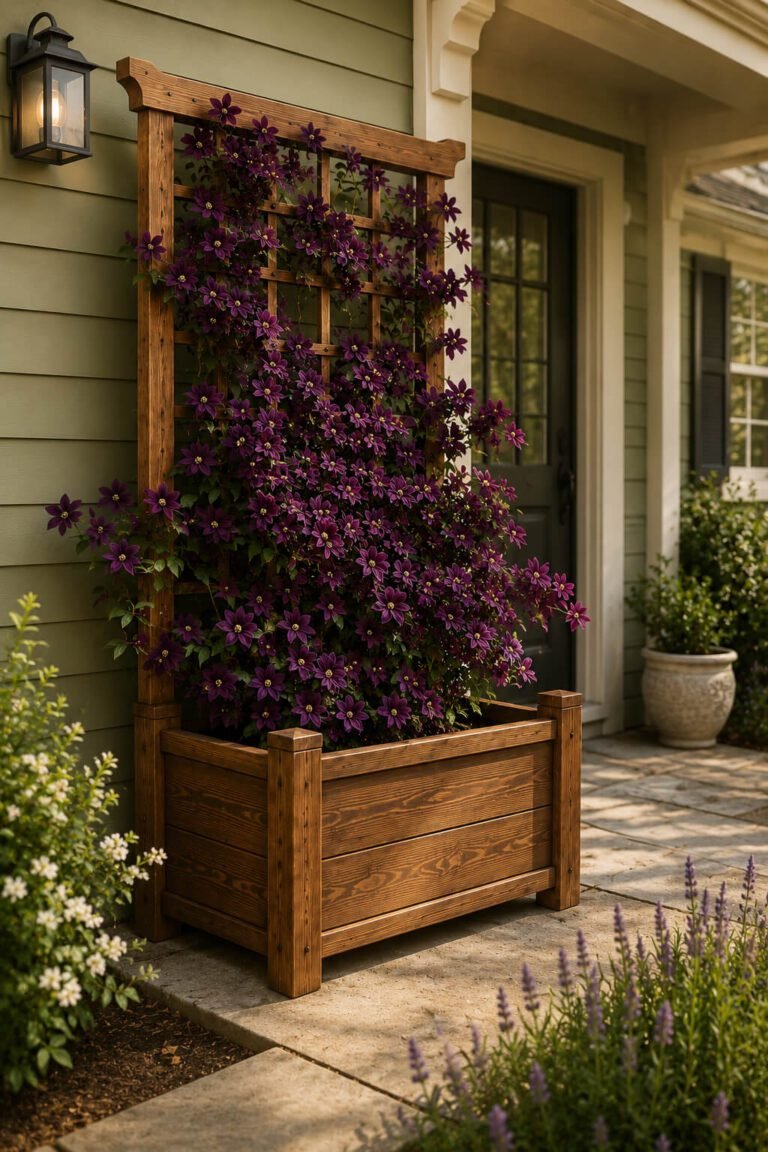
Plant climbing vines at the base — clematis, climbing roses, jasmine, or even annual morning glories will start threading themselves through door hardware and up the frame within weeks.
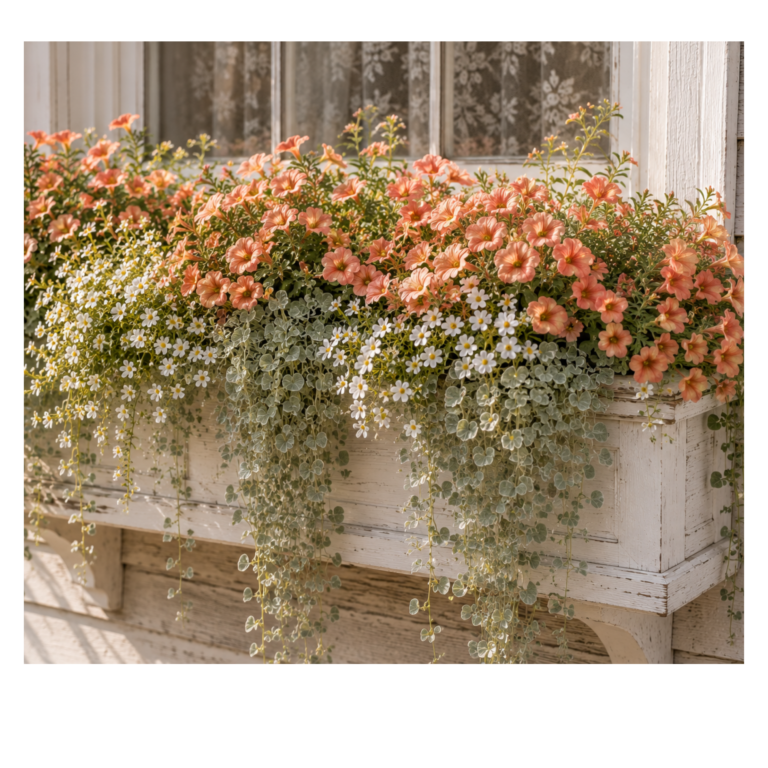
Add trailing plants in containers at the base that spill over and soften the bottom edge of the door. Ivy, sweet potato vine, bacopa — anything that trails naturally.
Hang things on the door — an old lantern, a small wreath, a cluster of dried herbs. Let it look like it’s been there forever.
Let moss establish itself on shaded sections. It takes time but the result is extraordinary.
The Porch Privacy Screen
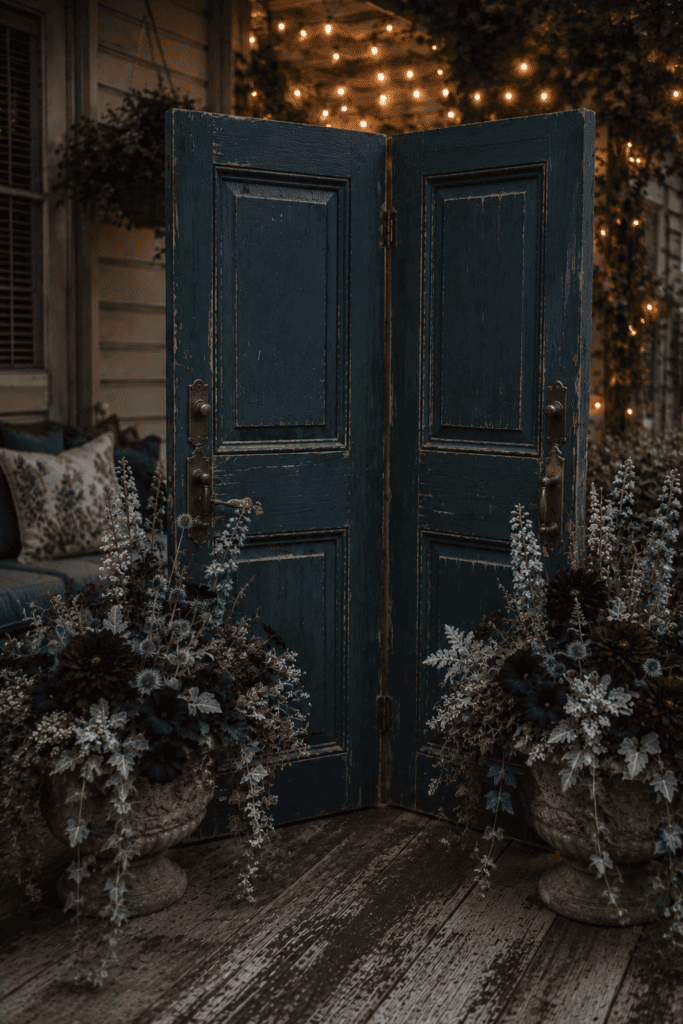
Two vintage doors hinged together and positioned in a corner of a porch create an instant private nook. Place a weathered chair or small bench behind them, add string lights, a candle, a trailing plant — and you’ve created the kind of intimate porch corner that makes people never want to leave.
The color of your door matters especially here because it becomes a backdrop for everything in front of it. Deep charcoal with burgundy climbing flowers and string lights glowing behind — that’s a corner that feels like a whole separate world from the rest of the porch.
Why This Works
Beyond the obvious visual appeal, vintage door screens do something that most garden structures can’t — they tell a story before anyone knows what the story is.
People stop. They look. They want to know where you found it, what it was before, how you did it.
That’s what salvaged material does when you use it well. It carries history into the present and turns a garden corner into something that couldn’t have been bought anywhere, designed by anyone else, or reproduced exactly.
Start with one door. See what happens.
Beyond the Garden — Creative Indoor and Outdoor Uses
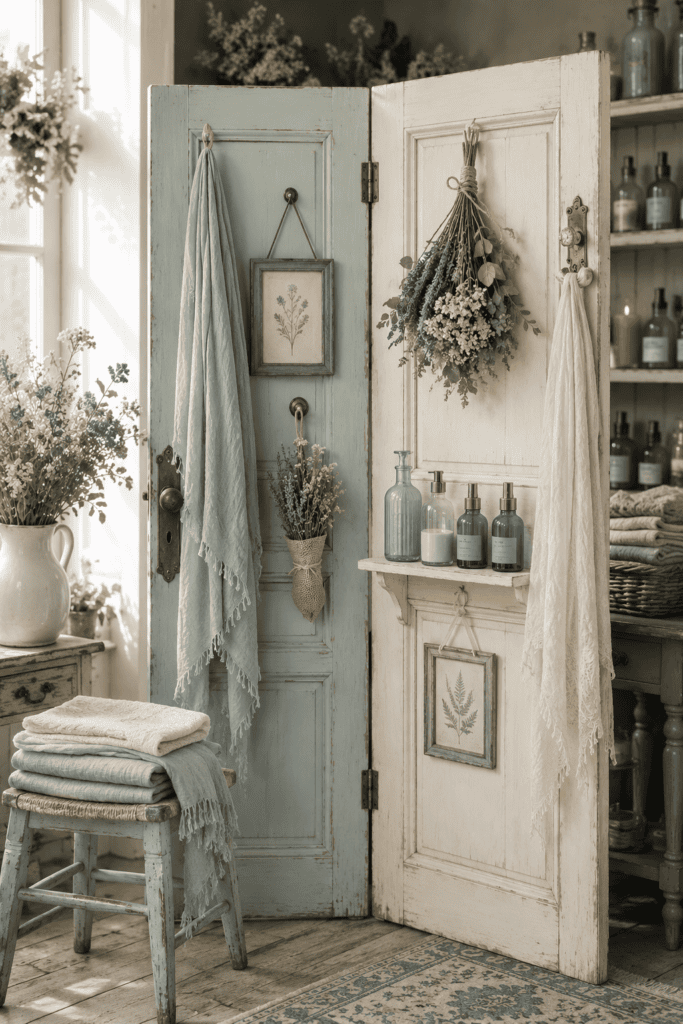
The same quality that makes vintage doors beautiful in a garden — their character, their history, their presence — makes them equally stunning indoors.
As a privacy screen:
Two doors hinged together at an angle create an instant room divider that no flat screen can replicate. In a bedroom, a reading nook, a home office corner — a painted vintage door screen adds architecture and personality to a space that otherwise has none. Position one behind a bed as a dramatic headboard alternative. Use one to divide a studio apartment into defined spaces. Angle two together in a corner to create a dressing area.
As a retail or boutique display:
This is where vintage doors become genuinely magical. Hang clothing, jewelry, scarves, lingerie — anything beautiful — directly from door hardware, hooks added to the panels, or a rod suspended between two hinged doors. The aged wood and original hardware creates an instant boutique aesthetic that no commercial display fixture can replicate. I used painted vintage doors as display screens in an Aveda spa for years — customers commented on them constantly. The doors became as much a part of the brand as anything we sold.
As an indoor backdrop:
A single painted door leaning against a wall becomes an instant photo backdrop, a focal point behind a desk, a statement piece in an entryway. Paint it a color that doesn’t exist anywhere else in the room and watch it become the thing everyone asks about.
As an outdoor room divider:
On a large patio or deck, hinged doors create defined zones — a dining area separated from a lounging area, a private corner carved out of an open space. With climbing plants at the base and string lights threaded through the hardware, a vintage door screen transforms a flat outdoor space into something with real atmosphere.
The rule is simple: wherever you need presence, privacy, or personality — a vintage door delivers all three.
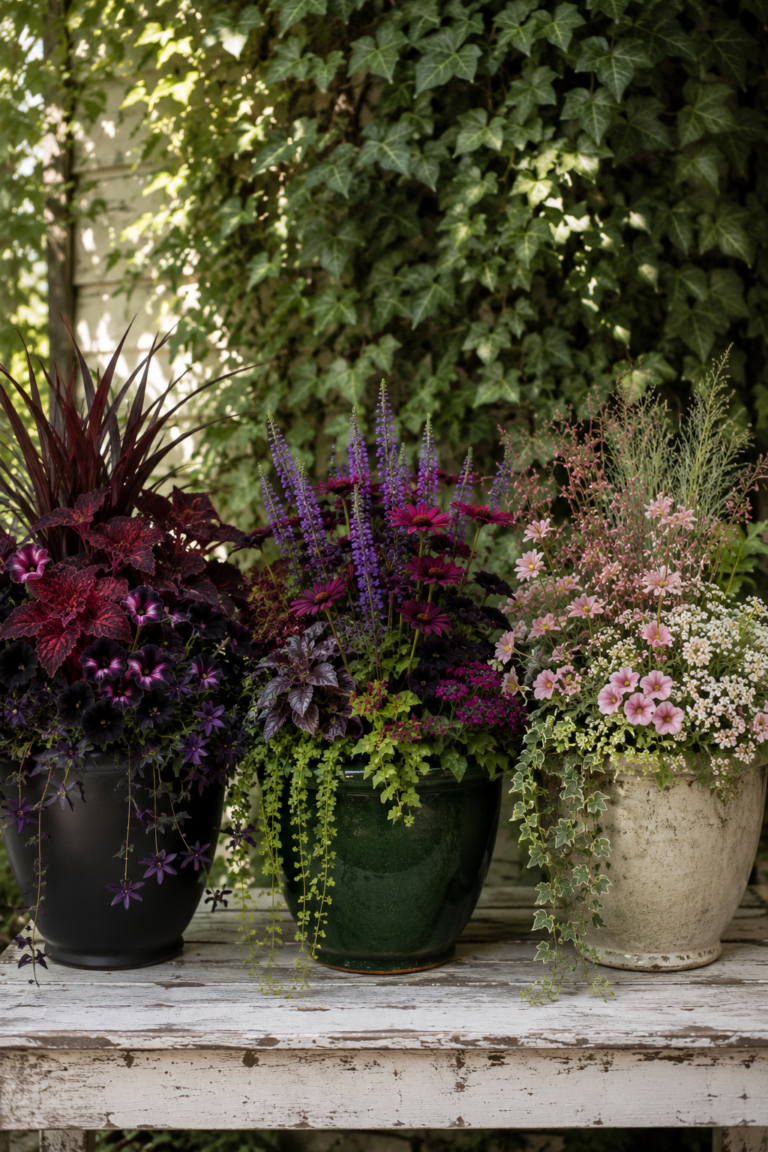
Love the idea of creating your outdoor space with intention and color? Garden Color Recipes Vol. 1 gives you 20 complete container garden combinations — flowers, foliage, and planter color all chosen together to create one specific mood. Perfect for the containers you’ll arrange at the base of your beautiful door screen.